The Ultimate Guide to Choosing LVL, Glulam, and Engineered Beams
Everything Arizona contractors need to know before ordering structural beams.
When you’re framing a custom home, opening up a great room, or supporting a heavy roof load, choosing the right beam isn’t just important—it’s critical.
Terms like LVL, Glulam, LSL, and PSL get thrown around on plans every day, but knowing which product is best for a specific application can save you time, money, and headaches on the jobsite.
At Miller Wholesale Lumber, we’ve been helping Arizona contractors source structural lumber for decades. Whether you’re building a production home in Phoenix or a custom mountain home in Payson, understanding engineered beams helps ensure your project is built right the first time. Miller Wholesale Lumber stocks a variety of engineered products—including TJI, LPI, BCI, LVL, LSL, PSL, and Glulam beams—to support residential and commercial construction projects.
Let’s break down the differences.
What Are Engineered Wood Products?
Unlike traditional dimensional lumber cut from a single tree, engineered wood products are manufactured by bonding wood veneers, strands, or laminations together under controlled conditions. The result is a product that offers:
- Greater strength
- Exceptional consistency
- Longer available lengths
- Reduced warping and twisting
- Predictable structural performance
Because every piece is manufactured to tight specifications, engineered lumber eliminates many of the natural defects found in standard framing lumber.
What is an LVL?
LVL stands for Laminated Veneer Lumber.
It’s made by layering thin wood veneers together with all of the grain running in the same direction. This creates an incredibly strong structural member that’s commonly used anywhere high loads need to be supported.
Common LVL Applications
- Window headers
- Door headers
- Garage door openings
- Floor beams
- Roof beams
- Rim boards
Why Contractors Like LVL
✔ High strength-to-weight ratio
✔ Available in long lengths
✔ Easy to install
✔ Consistent dimensions
✔ Minimal shrinking or twisting
If you’ve ever framed a large opening and wanted a beam that stays straight, LVL is probably what your engineer specified.
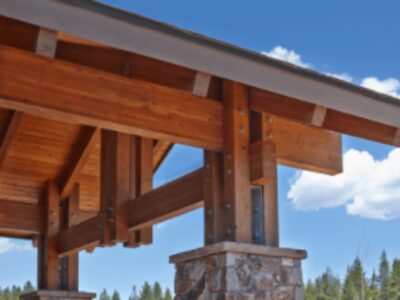
What is a Glulam Beam?
A Glulam (Glue-Laminated Timber) beam is built by bonding together multiple layers of dimensional lumber with high-strength adhesives.
Unlike LVL, Glulam beams can be manufactured in much larger sizes and longer spans.
They’re also attractive enough to leave exposed, making them popular in custom homes and commercial buildings.
Common Glulam Applications
- Great rooms
- Vaulted ceilings
- Outdoor pavilions
- Timber frame construction
- Large roof systems
- Commercial buildings
Many Glulam beams are manufactured with a slight upward camber that helps offset deflection once they’re under load.
LVL vs. Glulam: What’s the Difference?
| Feature | LVL | Glulam |
|---|---|---|
| Appearance | Utility grade | Attractive enough to leave exposed |
| Typical Use | Headers & concealed beams | Long-span and exposed beams |
| Span Capability | Excellent | Excellent (especially very long spans) |
| Sizes | Standard dimensions | Highly customizable |
| Best For | Everyday framing | Architectural or heavy structural applications |
Simple rule of thumb:
If nobody will ever see the beam, LVL is often the practical choice.
If the beam becomes part of the finished design—or if a very long span is required—a Glulam may be the better solution. Actual selection should always follow the engineered plans and structural requirements. Contractors also note that regional pricing and availability can influence which product is most economical.
What About LSL and PSL?
Two other engineered products frequently specified by structural engineers are:
LSL (Laminated Strand Lumber)
LSL is manufactured from compressed wood strands.
It’s commonly used for:
- Tall wall studs
- Rim boards
- Door framing
- Window framing
Because it resists twisting and shrinking, LSL is an excellent choice when dimensional stability matters.
PSL (Parallel Strand Lumber)
PSL is one of the strongest engineered wood products available.
You’ll often see it used for:
- Heavy beams
- Large columns
- Commercial applications
- Long-span structural members
PSL is designed for situations where exceptional load-carrying capacity is required.
Why Arizona Contractors Choose Engineered Lumber
Arizona presents unique challenges for building materials.
Extreme summer temperatures, low humidity, and seasonal monsoons can all affect traditional lumber.
Because engineered lumber is manufactured for consistency, it generally offers:
- Less warping
- Reduced crown
- Fewer callbacks
- Better dimensional stability
- Predictable structural performance
That means fewer surprises once the framing is complete.
Can Engineered Beams Be Used Outdoors?
This is one of the most common questions we hear.
The answer is:
Sometimes—but only when they’re specifically designed or protected for that application.
Many engineered wood products are intended for dry-service conditions. If a beam will be exposed to weather, the structural design and manufacturer specifications should determine the correct product and required protection.
Choosing the Right Beam Starts with the Plans
One of the biggest misconceptions is that all engineered beams are interchangeable.
They’re not.
The beam specified by your engineer considers:
- Span length
- Roof load
- Floor load
- Point loads
- Bearing conditions
- Deflection requirements
- Local building codes
Changing one beam type for another isn’t simply a matter of matching dimensions. Any substitutions should be approved by the project’s structural engineer.
How Miller Wholesale Lumber Can Help
Choosing the right engineered beam doesn’t have to slow down your project.
At Miller Wholesale Lumber, we work with contractors throughout the Phoenix metro area and across Arizona to supply:
- LVL beams
- Glulam beams
- TJI® Joists
- LPI® Joists
- BCI® Joists
- LSL
- PSL
- Framing lumber
- Simpson Strong-Tie® hardware
- Plywood, OSB, and other framing materials
If you’re framing a single-family home or a large commercial project, our knowledgeable team can help ensure you have the materials you need to keep your project moving.
What Contractors Should Know
Engineered lumber has transformed modern construction by making it possible to build stronger, straighter, and more efficient structures than ever before.
Understanding the role of LVL, Glulam, LSL, and PSL products helps contractors choose the right material for every application, avoid costly delays, and deliver better results for their clients.
When your next project calls for engineered beams, the team at Miller Wholesale Lumber is here to help. Visit millerwholesalelumber.com or contact our Tempe location 480-731-9400 to discuss your project and get the right materials ordered & delivered to your jobsite
